Direct answer
The Canadian citizenship test is a knowledge exam that most adult applicants must pass as part of their citizenship application. It covers Canada's history, geography, political system, national symbols, and the rights and responsibilities of citizens. Everything you need to study is in one free document: the official guide Discover Canada, published by Immigration, Refugees and Citizenship Canada (IRCC). The test uses multiple choice and true or false questions, and you take it online or in person depending on your invitation. With steady preparation based on the official guide, most people pass without drama. Requirements and procedures change over time, so always confirm the current rules on Canada.ca before your test date.
Who has to take the citizenship test
When people map out the road to becoming a Canadian citizen, the test is usually the step they dread most. In their imagination it becomes a fearsome exam, when in reality it is a general knowledge quiz about Canada, designed to be passable by anyone who has taken the time to study the official guide.
Before we go further, one thing I always say up front: I am an independent writer, not a lawyer and not a regulated immigration consultant. What I share here comes from my own research and from conversations with people who have been through the process. For your personal situation, the only source that counts is Canada.ca, and where needed, an authorized professional.
An age-based requirement
Not every applicant has to sit the test. As I update this article in 2026, it applies to applicants aged 18 to 54: people under 18 and those 55 and over are exempt from it, and from the language requirement as well. These boundaries are set by regulation and can be adjusted, so please check where you stand directly on the official test page. If your family is applying together, it is entirely possible that some family members will need to take the test while others will not.
The test comes after the other requirements
Another point worth stressing: the test is not the first step. Before you are ever invited to take it, you must have filed a complete application and meet the other citizenship requirements, including holding permanent residence in Canada, satisfying the physical presence requirement, and, for certain age groups, demonstrating language ability. The knowledge test is one piece of a larger puzzle, not a standalone entrance exam. If your application is complete and accepted into processing, IRCC will send you an invitation to take the test when the time comes, with all the practical instructions.
Discover Canada: the only study guide you need
If you remember one thing from this article, make it this: every question on the test comes from the content of the official study guide, Discover Canada: The Rights and Responsibilities of Citizenship. The guide is published by the Government of Canada, it is completely free, and it is available on Canada.ca in several formats: online reading, downloadable PDF and an audio version. You do not need to buy any book, any paid app, or any course.
I insist on this because a small industry has grown around the fear of this test, and I will come back to it in the section on scams. For now, just hold on to this: the official and sufficient study material fits in one document you can read over a few evenings, then reread and review at your own pace.
Canada's history
The guide devotes a large share of its pages to the country's history: Indigenous peoples and their foundational place, the arrival of French and British explorers, Confederation, the world wars, and the shaping of modern Canada. Do not try to memorize every date as if you were cramming for a university exam. Aim instead to understand the storyline: who the key figures were, which events shaped the country, how Canada became what it is today. The test checks that overall understanding far more than it rewards encyclopedic detail.
Geography and the regions
You will also review geography: the provinces and territories, their capitals, the major natural regions, the oceans that border the country. If you already live in Canada, part of this will feel familiar. What often surprises candidates are the questions about regions far from their own: someone living in Toronto can be asked about the northern territories, and someone in Vancouver about the Atlantic provinces. The guide covers the whole country, and so does the test.
The political system and justice
How Canada's institutions work takes up a central place: constitutional monarchy, the federal Parliament and its two chambers, the role of the prime minister, how powers are divided between the federal government and the provinces, elections, and the justice system. This is often the section candidates find most demanding, especially when they come from a country with a very different system. Take the time to understand who does what: who represents the Crown, who passes laws, how someone becomes a member of Parliament. These mechanics come up again and again in the questions.
Symbols and Canadian identity
The beaver, the maple leaf, the national anthem, the official languages, iconic sports, national holidays: Canada's symbols make up a lighter chapter, almost pleasant to review. Do not skip it on that account. These questions have a reputation for being easier, and they are guaranteed points on test day for anyone who has done the reading properly.
Rights and responsibilities of citizens
Finally, the heart of the guide, the part that gives the document its subtitle: the rights protected by the Canadian Charter of Rights and Freedoms, and the responsibilities that come with citizenship, such as voting in elections, obeying the law, serving on a jury if called, and helping others in your community. This chapter is more than exam material: it describes the civic contract you are about to join. Many candidates have told me it is the section that stayed with them longest.
The test format: what to expect
Multiple choice questions
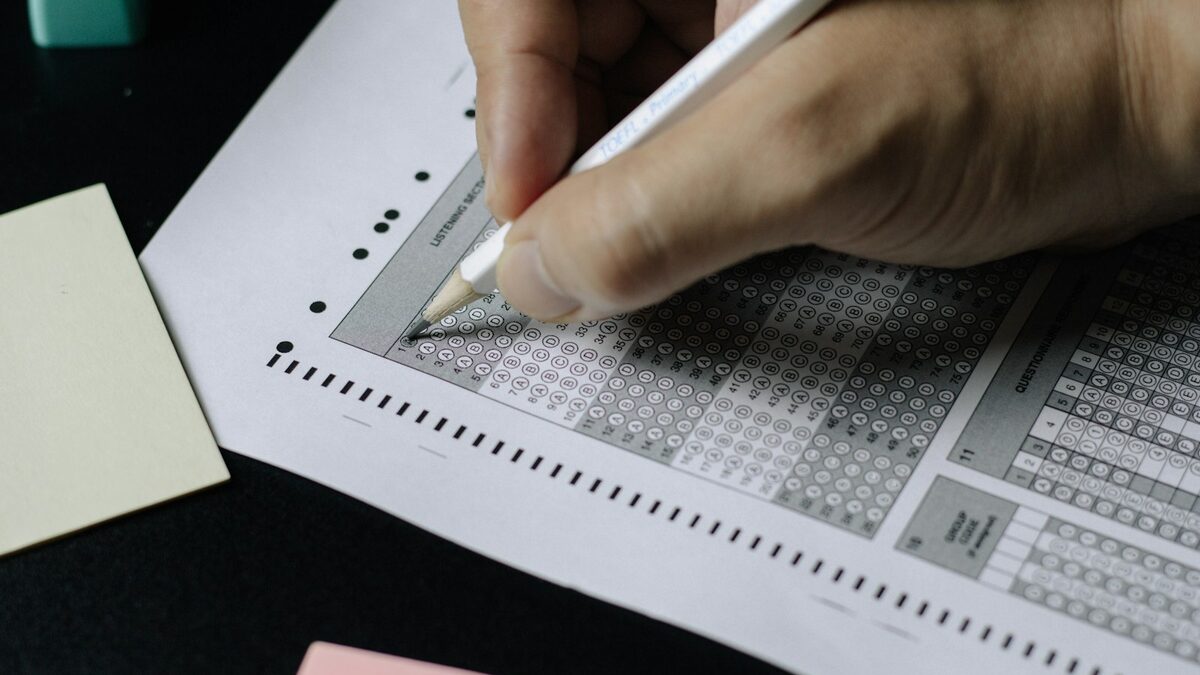
The Canadian citizenship test is a written questionnaire made up of multiple choice and true or false questions. There is no essay, no open-ended question, no oral interview at this stage: you read a question and pick one answer from the options offered. As I update this article in 2026, the test has 20 questions drawn from the Discover Canada guide, and you need 15 correct answers, or 75%, to pass. Since March 2026, the test has been taken online. These parameters are set by IRCC and can change: the official test page lists the values currently in force, including the time limit.
What I can tell you is that the format is designed to be passable by anyone who has prepared properly. Questions draw on the guide's content, sometimes almost word for word, sometimes rephrased in ways that reward understanding rather than rote memorization.
Online or in person, depending on your invitation
In recent years, most people have taken the test online, from home, on a computer with a camera. But the choice is not yours to make: your invitation specifies the format that applies to you. Some applicants are invited to take the test in person at an IRCC office, notably when their situation calls for it or when they have requested an accommodation. Read your invitation carefully: it contains the format, the window of time you have to complete the test, and the technical instructions.
In the official language of your choice
You take the test in English or French, whichever you prefer. That freedom matters: choose the official language in which you read and understand nuanced text most comfortably. Be careful not to confuse this choice with the language requirement of the citizenship application itself, which is a separate condition; I explain the difference in my article on the language test for Canadian immigration. The knowledge test does not measure your language level, but a misread question can cost you points, which is why this choice deserves a moment's thought.
How to prepare effectively
Active reading beats skimming
My first recommendation fits in two words: active reading. Skimming Discover Canada once is usually not enough. Read it chapter by chapter, taking notes, highlighting the names, institutions and events that keep coming back. After each chapter, close the guide and try to summarize out loud what you just read, as if you were explaining it to a friend. This simple technique turns passive reading into real learning, and it instantly exposes the passages you have not truly retained.
The official practice questions
IRCC provides sample questions that let you get used to the format. Use them as a thermometer: run through a set, note the topics where you hesitate, go back and reread the matching chapters, then try another set a few days later. There are also countless unofficial quizzes online; some are fine, others contain errors or invented questions. If you use them, keep one rule in mind: only the official guide is authoritative. Whenever a quiz contradicts Discover Canada, the guide wins.
Consistency beats cramming
The people who walk into the test feeling calm are almost always the ones who spread their preparation over several weeks, in short regular sessions, rather than those who tried to swallow the guide in two days. Twenty to thirty minutes a day for a few weeks beats a weekend of cramming. Your brain consolidates knowledge through sleep and spaced repetition, not through panic. Start studying as soon as your application is acknowledged, without waiting for the invitation: the study time you bank early removes an enormous amount of pressure later.
Study in your stronger official language
The guide exists in both English and French. Study in the language you will take the test in, and pick the one where your reading comprehension is strongest. If you are unsure, try this: read the same chapter in both languages and notice which one asks less of you. Some bilingual candidates like to read the guide in one language and practice questions in the other, which reinforces understanding of the concepts rather than mechanical memorization of the wording. That is a bonus technique, not a requirement.
Get the people around you involved
One field-tested tip I find genuinely useful: get quizzed. A spouse, a friend or even a child asking you questions from your notes turns revision into a game and reveals your weak spots. Many families who apply together also study together, and relatives who are exempt from the test because of their age often join in happily. Canada's history and institutions stick better when you talk about them than when you reread them in silence.
Test day
The invitation and the deadlines
Everything starts with IRCC's invitation, usually sent by email. It states the format (online or in person), the window in which you must complete the test, and the steps to follow. Read it twice rather than once, put the deadline in your calendar, and do not let it slip: an ignored invitation can complicate your file. If something serious gets in the way (illness, a family emergency, a technical problem), notify IRCC using the procedure described in the invitation rather than letting the date quietly expire.
The identity documents to have ready
Whether the test is online or in person, you will have to prove your identity. Prepare the documents listed in your invitation, typically your permanent resident card and another piece of photo identification, plus anything else the invitation specifies. Check expiry dates ahead of time. For an online test, you will generally need to show these documents to the camera, so have them within reach, clean and legible, before you start the session.
The online test environment
For the online version, set yourself up properly: a quiet room where you will be alone, a stable internet connection, a computer with a working camera and microphone, and good lighting. The online test is proctored: the camera is there to confirm that you are the one answering and that nobody is feeding you answers. Close other applications, put your phone out of reach and warn the people you live with. An environment that follows the instructions spares you the stress of an interruption or an invalidated session.
When the moment comes, breathe. Read every question to the end, including all the answer options, before choosing. Multiple choice wording sometimes turns on fine nuances, and rushing is the leading cause of avoidable mistakes among candidates who actually knew the right answer.
What happens after the test
Your result and the next steps
After the test, you are informed of your result through the channels IRCC has set up, often quite quickly for the online format. If you pass, your file moves on toward the final stages, including the citizenship ceremony and the oath. I walk through everything that comes next, from the ceremony to your first steps as a new citizen, in my article on life after Canadian citizenship. Keep in mind that passing the test does not close the review of your application: IRCC keeps verifying that all requirements are met right up to the final decision.
The interview with an officer
In some cases, you may be called to an interview with a citizenship officer, before or after the test. Do not panic: the interview is not a trap. The officer may want to check your original documents, clarify elements of your file, assess your ability to hold a conversation in an official language, or go over your absences from Canada. Answer simply and honestly, bring the documents requested, and if a question catches you off guard, take a moment to think before answering. Consistency between your answers and your written application is what matters most.
If you fail: nothing is lost
Let us talk honestly about failing, because the fear of failure paralyzes more candidates than the test itself ever does. If you do not achieve the required result on your first attempt, your application is not refused on the spot. As I update this article in 2026, IRCC automatically schedules a retake after a failed attempt, usually 4 to 8 weeks later.
If the written attempts are still not enough, your file is still not automatically rejected: you can be called to a hearing with a citizenship officer, where your knowledge is assessed differently, orally. The precise number of retakes and the way the hearing works are matters of current procedure, which I encourage you to verify on the official page.
The takeaway: the system is built to give you several opportunities to demonstrate your knowledge, not to eliminate you at the first stumble. A failed attempt is a signal to rethink your study method, identify the weak chapters and come back stronger. I have read plenty of accounts from people who passed comfortably on their second try after changing the way they studied.
Exemptions and accommodations
Who is exempt from the test
As mentioned earlier, the obligation to take the test depends on age: the youngest and oldest applicants are exempt as of right. Beyond that, some people can be exempted on health grounds, notably where a medical or cognitive condition would make a knowledge assessment unfair. These waivers are not automatic: you request them, with supporting documents, following IRCC's procedure. If you think this applies to you, raise it when you file your application rather than when the invitation lands in your inbox.
The accommodations available
Between the standard requirement and a full waiver sits a whole range of accommodations for people who can take the test but need adjustments: extra time, an adapted format, specific assistance, taking the test in person instead of online, or the other way around. People living with visual, hearing or mobility disabilities, or with learning disorders, are the most directly concerned. Here again, the process starts with you: describe your needs to IRCC following the instructions on the official page, ideally as early as possible. The system genuinely is designed to adapt, but it can only do so if it knows.
Scams and traps to avoid
The citizenship test attracts its share of opportunistic sellers, and I want to arm you against the most common schemes.
The first and most widespread scam is websites or apps selling "official question banks" or "the real test questions". Let us be clear: nobody sells the official test questions, because IRCC does not publish them and does not license them to anyone. What these sellers offer is, at best, questions invented from the free guide; at worst, material riddled with errors. Everything you need is free on Canada.ca: the Discover Canada guide and the official sample questions.
Also watch out for fake websites that imitate the look of government services to charge you for free services or harvest your personal data. Before typing in any information, check that the site's address ends in canada.ca. No legitimate organization will ever ask you to pay to access the study guide, to book your test, or to "guarantee" your success.
Finally, beware of "guaranteed pass" promises from certain private courses. Studying with a structured course can suit some profiles, particularly people who struggle with self-directed study, but no course can guarantee a result, and none has access to anything the free guide does not already contain.
Common mistakes candidates make
After talking with many candidates over the years, I see the same traps come up again and again, and the good news is that all of them are easy to avoid.
The first mistake is studying from unofficial summaries or dated videos instead of the guide itself. The test follows the official guide currently in force: stale or approximate information picked up elsewhere can steer you wrong on the day.
The second is neglecting the chapters that seem minor, like symbols or justice, and betting everything on history. The test draws on the whole guide, and the questions with a reputation for being easy only pay off for those who prepared them.
The third mistake is logistical: an invitation read diagonally, an expired piece of ID, an online test launched from a noisy café on shaky wifi. Serious logistical preparation counts almost as much as intellectual preparation.
The fourth, subtler one, is taking the test in your weaker language out of pride or administrative habit. Choose the official language in which you understand written nuance best, plain and simple.
Finally, some candidates panic after one bad practice quiz and lose confidence. Practice quizzes exist precisely to expose weaknesses while there is still time to fix them. A poor practice score a week before the test is useful information, not a verdict.
Frequently asked questions
Is the Canadian citizenship test hard?
It depends on your preparation, and that is a real answer, not a dodge. The test is not designed to trick you: it checks that you have read and understood the official guide Discover Canada. People who studied it seriously, over several weeks, using practice questions to gauge their progress, most often describe the test as manageable. Those who walk in unprepared, counting on general knowledge or on their years living in the country, are more often caught off guard, especially by questions on institutions and history. Prepare as you would for an exam that matters, and it holds no terror.
In which language can I take the test?
You can take the test in English or French, whichever you choose. My advice is to pick the official language in which your reading comprehension is strongest, because multiple choice questions sometimes hinge on subtle differences in wording. This choice is independent of the language requirement attached to the citizenship application, which is a separate condition assessed differently. Study the guide in the language of your test so that on the day, you recognize the exact vocabulary you reviewed.
Do I need to pay to prepare for the test?
No. The official study guide Discover Canada is free, available on Canada.ca as an online read, a PDF and an audio version, and it contains everything the test can ask. Official sample questions are also freely available. Sites selling "official questions" or pass guarantees have access to nothing more than you do: at best they repackage the free content, at worst they spread errors. If a structured course helps you study, that is your call, but it is never a necessity.
What happens if I fail the test?
Failing your first attempt does not mean your application is refused. You will be invited to retake the test, and if the written attempts are not enough, a hearing with a citizenship officer allows your knowledge to be assessed orally instead. The process is designed to give you several chances to succeed. Use the time before your retake to change your method: active chapter-by-chapter reading, personal notes, regular quizzes and targeted review of the topics that tripped you up. The precise retake rules are on IRCC's official page.
Is the test taken online or in person?
Both formats exist, but the choice is not yours: your invitation specifies which one applies to you. In recent years, the online test taken from home under camera proctoring has become the most common format, while in-person sittings tend to involve particular situations or accommodation requests. In both cases, the content of the exam is the same and comes from the Discover Canada guide. Read your invitation carefully for the technical instructions and the deadlines.
Can I be exempted from the test or get accommodations?
Yes, in certain cases. The age-based exemption applies automatically to applicants outside the age range concerned. Waivers on medical or cognitive grounds can be granted upon a justified request. In between, accommodations exist for people who can take the test with adjustments: extra time, adapted formats, assistance. The key is to ask IRCC as early as possible, with supporting documents, following the procedure described on the official test page.
Official sources
To prepare for your test, rely first on these Government of Canada pages:
Test procedures, eligibility criteria and formats change regularly: when in doubt, the up-to-date official page always prevails over any article, including this one.