Immigrate to British Columbia: Vancouver, regions and opportunities
Direct answer
People who want to immigrate to British Columbia are usually chasing mountains, ocean, and a mild climate on the coast, all wrapped inside an economy built around tech, film, tourism, and natural resources. The flip side is one of the highest costs of living in the country, especially for housing in Vancouver and Metro Vancouver. The main provincial door is the BC Provincial Nominee Program, which often ties into Express Entry. My baseline advice is simple: check current figures on official sources, and look well beyond Vancouver before you decide anything.
Why choose British Columbia
I'll be honest with you right off the top. British Columbia, or BC as everyone calls it, is not a province you pick with a spreadsheet alone. You pick it with your gut too. It's the westernmost province in Canada, wedged between the Pacific Ocean and the Rockies, and the scenery does something to people on their very first morning here.
When I talk with folks who just settled in, the same word keeps coming up: nature. You can hit a trail in the morning and walk along a beach in the afternoon. The mountains aren't some far-off postcard, they're at the end of the street across a good chunk of the province.
But it isn't only about the landscape. BC is an economy that faces the Asia-Pacific, with a major port and strong trade links. That creates a particular kind of job, a particular kind of city, and a cultural mix you won't find everywhere in Canada. Vancouver is a genuinely international metropolis.
We should talk about lifestyle too. BC has a reputation as a laid-back province, leaning hard into the outdoors, health, and a certain way of living well. That appeals enormously to families, to young professionals, and to people who want to slow down a little without giving up the comforts of a big urban centre.
That said, I'm not here to sell you a fantasy. The beauty of the place comes at a price, and that price shows up mostly on the housing bill. We'll get into the details, because it's the single point that scares off the most prospective immigrants.
There's also a multicultural dimension I'd be remiss not to mention. BC has welcomed waves of newcomers for generations, and that history shapes everyday life. In a lot of neighbourhoods you'll hear several languages on the same block, find grocery stores stocked with food from home, and meet people who arrived not so long ago themselves. For a newcomer, that kind of environment can soften the landing in ways that are hard to measure but easy to feel.
One province, many realities
The mistake I see most often is reducing BC to Vancouver. The province is huge and full of contrasts. The coast has almost nothing in common with the interior, and Vancouver Island has its own quieter mood.
If you're thinking through your move, take the time to look at a map. Vancouver, Victoria, Kelowna, Kamloops, Prince George: these are different worlds, with climates, job markets, and housing costs that share very little.
Vancouver and Metro Vancouver
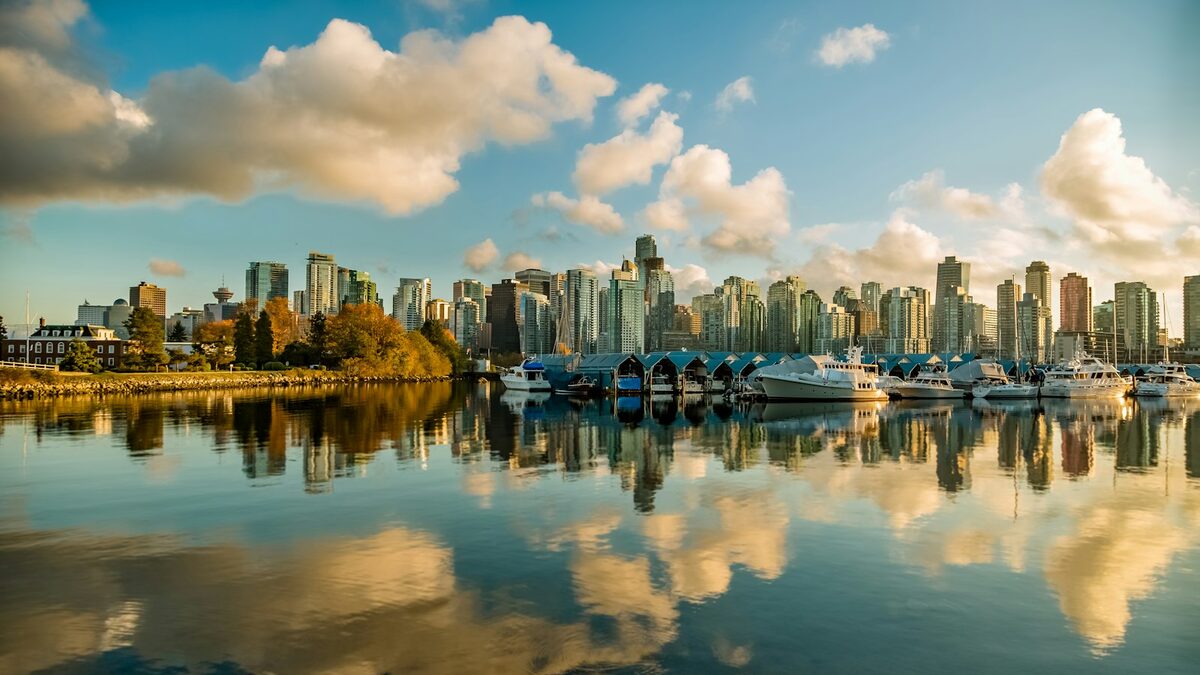
Let's start with the city that makes people dream and grind their teeth at the same time. Vancouver is the economic heart of the province and one of the busiest urban centres in the country. It's where a large share of the skilled jobs, head offices, and cultural life are concentrated.
Metro Vancouver, meanwhile, gathers a string of municipalities around the central city: Burnaby, Richmond, Surrey, Coquitlam, North Vancouver, and others. A lot of newcomers end up settling in these suburbs, where there's more housing on offer, even though it stays expensive.
What I love about Vancouver is that sense of a city inside nature. You've got the ocean, the North Shore mountains, massive parks like Stanley Park, and a food scene shaped deeply by Asian communities. You'll eat some of the best meals in the country here, in my opinion.
The job market is varied. You'll find tech, financial services, the port and logistics sector, tourism, healthcare, education, and a very active film industry. Vancouver is nicknamed Hollywood North because of all the productions that shoot there.
But let's be clear about the sore spot: housing. Metro Vancouver is one of the tightest and most expensive real estate markets in Canada. Whether you want to rent or buy, plan for a serious budget and a lot of patience.
The housing challenge
I won't hand you a precise rent figure, because it moves too fast and inventing one would be dishonest. What I can say is that housing is structurally costly in Metro Vancouver, and that this has to sit at the centre of your planning.
For current amounts, lean on reliable sources and official documentation rather than hearsay. I'll also point you to my guide on housing for newcomers to Canada, which explains how to search and how to avoid the usual traps.
In practice, a lot of people share a place when they first arrive, especially the first few months. Others pick a suburb that's farther out and accept a longer commute. It's the classic trade-off between cost and travel time.
One thing to keep in mind: a good salary in Vancouver can look high on paper, but once the rent is paid, what's left to actually live on shrinks fast. That's exactly why I always push people to look at their overall budget before they fall in love with a neighbourhood.
Beyond Vancouver: Victoria and the interior
If Vancouver scares you on the budget side, know that there are other options in BC, and some of them are very appealing. I honestly think immigration guides talk about them far too little.
Victoria, the provincial capital, sits on Vancouver Island. It's a smaller city with a faintly British charm, a gentler pace, and one of the mildest climates in Canada. You'll find public administration, tourism, healthcare, education, and a bit of a tech scene.
Vancouver Island as a whole draws people who want a coastal lifestyle without the frenzy of the big city. The downside is that you're on an island: you take the ferry or fly to reach the mainland, and the job market is more limited.
The interior of the province changes the whole equation. Kelowna and the Okanagan Valley are known for their lakes, vineyards, and hot summers. It's a region pulling in more and more families and retirees, with a housing market that's often more attainable than Metro Vancouver.
Other interior cities like Kamloops, or Prince George up north, have their own strengths. You'll find sectors tied to resources, forestry, mining, healthcare, and services. The cost of living is generally more reasonable, and some regions have a real need for workers.
Why look at the regions
I repeat it to every person I advise: don't pin all your hopes on Vancouver. Provincial programs often reward settling in the regions, and the cost of living there is gentler.
Living in Kelowna, Nanaimo, or Kamloops can be the difference between scraping by and actually building a life. You keep BC's gorgeous backdrop while easing the pressure on your wallet. It's a calculation a lot of people forget to run.
That said, every region has its limits. The north has harsher winters, the island means ferry crossings, and some smaller towns offer less variety in jobs. You have to do your homework, city by city, before you commit.
Something I always suggest: if you can, visit before you commit for good. A weekend in a place tells you more than weeks of reading. You feel the pace, you see how far the grocery store is, you notice whether the town has the services your family needs. A region can look perfect on paper and feel wrong in person, or the opposite. Trust that gut read alongside the numbers.
The cost of living, let's be frank
This is probably the most important section of the article, so I'll take care with it. The cost of living in BC, and above all in Metro Vancouver, is high relative to the rest of Canada. Ignoring this point is setting yourself up for a nasty surprise.
The line item that weighs heaviest, by a wide margin, is housing. Whether you rent or buy, that's where the biggest chunk of your income goes on the coast. The rest, groceries, transit, services, follows the trend of any large Canadian metropolis.
I won't invent amounts. To plan seriously, lean on current tools and read my guide on the cost of living in Canada, which explains how to build a realistic budget based on the city you're targeting.
What grates on me in some discussions is when people compare a Vancouver salary to a salary elsewhere without accounting for housing. A higher income means nothing if the rent eats it all. Always look at what's left over, not just the gross.
My approach, when I help someone plan: we start with housing, add the fixed expenses, and see what's left to save and to live on. If the math doesn't work in Vancouver, we look at Victoria, Kelowna, or the interior. Often the problem solves itself just by changing cities.
A solid emergency fund
If you immigrate to BC, I'd advise arriving with a bigger financial cushion than you'd need elsewhere in Canada. The first months are expensive: damage deposit, furniture, transit, and the time it takes to land a stable job.
A fund that covers several months of expenses keeps you from making decisions under pressure, like grabbing the first apartment you see or the first underpaid job. That breathing room is your best insurance against the stress of settling in.
I'll add one more thought here. People tend to budget for the obvious costs and forget the small ones that pile up in a new place. Setting up a phone plan, getting around before you know the transit system, replacing things you couldn't pack, the odd unexpected fee. None of these are huge on their own, but together they can erode a thin cushion fast. Padding your estimate by a comfortable margin is never a mistake on the coast.
The job sectors that matter
Let's talk work, because that's what makes everything else possible. BC has a diversified economy, and depending on your trade, your odds and your ideal city won't be the same.
Tech is an important engine, especially in Vancouver and increasingly in Victoria and Kelowna. Software development, video games, visual effects, clean technologies: this sector pulls in talent from around the world and stays a real strength for the province.
Film and audiovisual are a genuine local specialty. With all the productions shooting in the Vancouver area, there's an ecosystem of technical trades, special effects, and production roles with no equivalent anywhere else in the country.
Tourism and hospitality carry a lot of weight, fuelled by the natural setting, ski resorts like Whistler, and the flow of visitors. It's seasonal in places, but it offers many first work experiences right after you arrive.
Natural resources, forestry, mining, and energy remain essential, especially in the interior and the north. Healthcare, education, construction, and the port and logistics services round out the picture and recruit steadily.
One pattern worth understanding: the sector you work in often dictates where you'll be happiest. A film technician or a software developer leans toward Vancouver, while someone in forestry or mining will find more openings in the interior and the north. Healthcare and construction, on the other hand, are needed almost everywhere in the province. Matching your trade to the right region early saves you from chasing jobs in a city that was never going to have many for you.
Getting your profession recognized
One piece of advice that holds across the whole province: look into recognition of your profession early. Some trades are regulated and require a licence or an equivalency before you can practise.
This touches healthcare, law, engineering, teaching, and several skilled trades. The process can take time, so it's better to start it before you even arrive. That spares you the letdown of landing and discovering you can't work in your field right away.
Gather your documents early and have them assessed where that's possible from abroad. Diplomas, transcripts, proof of experience, sometimes certified translations. The regulatory bodies in BC each have their own steps, and contacting the right one ahead of time tells you exactly what to expect. Even if your trade isn't regulated, lining up references and credentials before you move makes the first job search noticeably smoother.
The BC PNP and Express Entry
Let's get into the mechanics of immigration, because this is often where people get lost. The main provincial route to immigrate to British Columbia is the BC Provincial Nominee Program, shortened to BC PNP.
This program lets the province select people whose profile matches its economic needs, particularly in targeted sectors and regions. It speaks to skilled workers, certain graduates, and profiles in demand on the local market.
The basic mechanism is easy to grasp. The province nominates you, meaning it backs your application, and that nomination then strengthens your permanent residence request with the federal government. It's a boost that can make a real difference.
The BC PNP sits within the wider framework of the Provincial Nominee Program, which each province adapts to its own needs. The logic is the same everywhere: the province chooses, and the federal side confirms permanent residence.
A key point: the BC PNP has a stream tied to Express Entry. In plain terms, a provincial nomination through that stream can be added to your federal profile and clearly improve your chances of being invited. It's one of the most interesting combinations for many candidates.
How it fits together, concretely
Here's the general logic, without diving into specific thresholds I refuse to invent. You can aim for the BC PNP on its own, or through the stream tied to Express Entry if you're already eligible for that federal system.
If you go through the Express Entry stream, the BC nomination translates into a major advantage in your federal profile. It can turn a shaky application into a competitive one. That's why so many people try to combine the two.
For the exact criteria, the targeted sectors, the scores, and the quotas, I won't give you any numbers here. This data shifts, and only the official sources hold any weight. <!-- TODO verify number on official source --> Check the BC PNP site and the Government of Canada portal directly before any decision.
I'll say it plainly: immigration programs change, sometimes quickly. Something that was true last year can be out of date today. Always check the date on the pages you read, and trust the official source first.
Comparing with other provinces
If BC feels too expensive, don't close the door on the rest of the country. Other provinces have their own programs and a different cost of living. I've written a full guide, for instance, on how to immigrate to Alberta, a neighbouring province with a very distinct profile.
Comparing doesn't mean giving up on BC. It means making an informed choice. Sometimes you confirm that BC is the right option. Sometimes you discover that another province fits your trade and your budget better.
Climate and lifestyle
Climate is a major argument in BC's favour, but it needs nuance depending on the region. On the coast, in Vancouver and Victoria, winters are mild compared with the rest of Canada. You largely escape the brutal cold snaps of the Prairies.
The trade-off for that coastal mildness is the rain. Vancouver is known for its grey, damp winters. Some people adore that hushed atmosphere, others find it heavy after a few months. It's very personal, and it's worth thinking about honestly.
The interior, by contrast, has a more continental climate. The Okanagan Valley gets hot, sunny summers, perfect for people who love the sun and lakeside activities. Winters there are more pronounced, with snow, which delights the skiers.
The north of the province sees winters that are clearly colder and longer. If you're aiming for Prince George or northern regions, expect a real Canadian winter. That's not a flaw in itself, but you'll want to know it before you go.
A life built around the outdoors
Beyond the weather, it's the lifestyle that defines BC. Here, the outdoors isn't an occasional hobby, it's a culture. Hiking, skiing, cycling, kayaking, sailing: it's all within reach a good part of the year.
That outdoor culture shapes the rhythm of life, the weekends, even the way people socialize. If you love nature and being active, you'll feel at home very fast. It's one of the great pleasures of life in BC, and it costs nothing.
I'll add a word about the sense of distance. BC is far from the rest of Canada. Visiting family in Quebec or Ontario means a long flight. For some immigrants that distance matters, especially if loved ones are already settled elsewhere in the country.
My realistic advice for settling in
Now, the practical stuff. Here's what I'd tell a friend who tells me they want to immigrate to British Columbia. These are common-sense tips, but they make a real difference on the ground.
First, plan housing before anything else. It's the line item that can make or break your project on the coast. Know where you'll sleep the first few weeks, and don't sign a long-term lease before seeing the neighbourhood with your own eyes.
Next, keep an open mind about the city. You might dream of Vancouver, but Victoria, Kelowna, or Kamloops could suit your budget and your trade better. That flexibility is often what separates a successful move from a bitter return.
Third piece of advice: arrive with a solid financial cushion. I've said it already, but it bears repeating. BC is expensive to start out in, and money set aside buys you time and peace of mind to find the right job.
Fourth, start the professional recognition steps early. If your trade is regulated, every week gained up front counts. Don't wait until you're on the ground to discover the requirements.
Building your network
One last point worth its weight in gold: your network. In BC as everywhere, a lot of opportunities flow through contacts. Go to events, join groups tied to your sector, talk to people. It opens doors that no online application ever will.
Immigrant communities are a precious resource too. They know the good tips, the affordable neighbourhoods, the serious employers. Don't underestimate the mutual aid among newcomers, especially in those first months when everything feels complicated.
And be patient with yourself. Settling into a new province takes time. There will be hard days, frustrating paperwork, moments of doubt. That's normal. Most of the people I've helped end up finding their footing and falling deeply in love with their new life on the West Coast.
Frequently asked questions
Is it hard to immigrate to British Columbia?
It isn't inherently harder than in another province, but it depends a lot on your profile. The BC PNP targets specific sectors and skills, and the stream tied to Express Entry favours profiles that are already competitive federally. The real challenge in BC is less the immigration itself than the cost of settling in, especially housing. Prepare your file carefully and check the current criteria on the official sources.
Do I absolutely have to live in Vancouver?
No, and I'd even say it's often a mistake to lock yourself into that idea mentally. Vancouver concentrates the jobs and the cultural life, but its housing cost is extreme. Victoria, Kelowna, Kamloops, and other cities offer a superb setting for a more reasonable budget. Provincial programs also tend to reward settling in the regions. Look at the province as a whole before you settle on your choice.
Which sectors hire the most in BC?
The province has a diversified economy. Tech, film and visual effects, tourism and hospitality, healthcare, construction, and natural resources in the interior and the north are all important engines. Depending on your trade, certain cities will suit you better than others. Also think to check whether your profession is regulated, since that may require a licence before you can practise.
Is the BC PNP linked to Express Entry?
Yes, the BC PNP includes a stream tied to Express Entry. Concretely, a provincial nomination through that stream can be added to your federal profile and clearly improve your chances of being invited to apply for permanent residence. It's one of the most effective combinations for many candidates. For the exact criteria, check the official BC PNP site and the Government of Canada portal.
How much money should I plan for settling in?
I won't give a precise amount, because it depends on the city, your family situation, and the market at the time. What I can say is that BC calls for a bigger financial cushion than the Canadian average, mainly because of housing. Aim for enough to cover several months of expenses. To build a realistic budget, lean on current tools and official sources rather than rough estimates.
Is BC's climate really milder?
On the coast, in Vancouver and Victoria, yes: winters are mild compared with the rest of Canada, but often rainy and grey. The interior, like the Okanagan, gets hot summers and snowier winters. The north sees real cold, long winters. So there isn't one single climate in BC, but several. Choose your region based on the climate you can best live with over the long term.
Official sources
- Government of Canada, immigration and permanent residence (canada.ca)
- BC Provincial Nominee Program (BC PNP)
- Express Entry, Government of Canada (canada.ca)